Summary: Swimming Holes in Tennessee
If you know me, you know I absolutely love finding a swimming hole to jump in when it’s hot out. There is almost nothing better than finishing a summer hike by jumping into a cold natural swimming hole.
Don’t get me wrong, I love a beautiful overlook, but when Tennessee gets hot, I want my outdoor adventures to include water. Give me a waterfall, a clear mountain pool, or a creek where I can cool off and sit for a while, and I am happy.
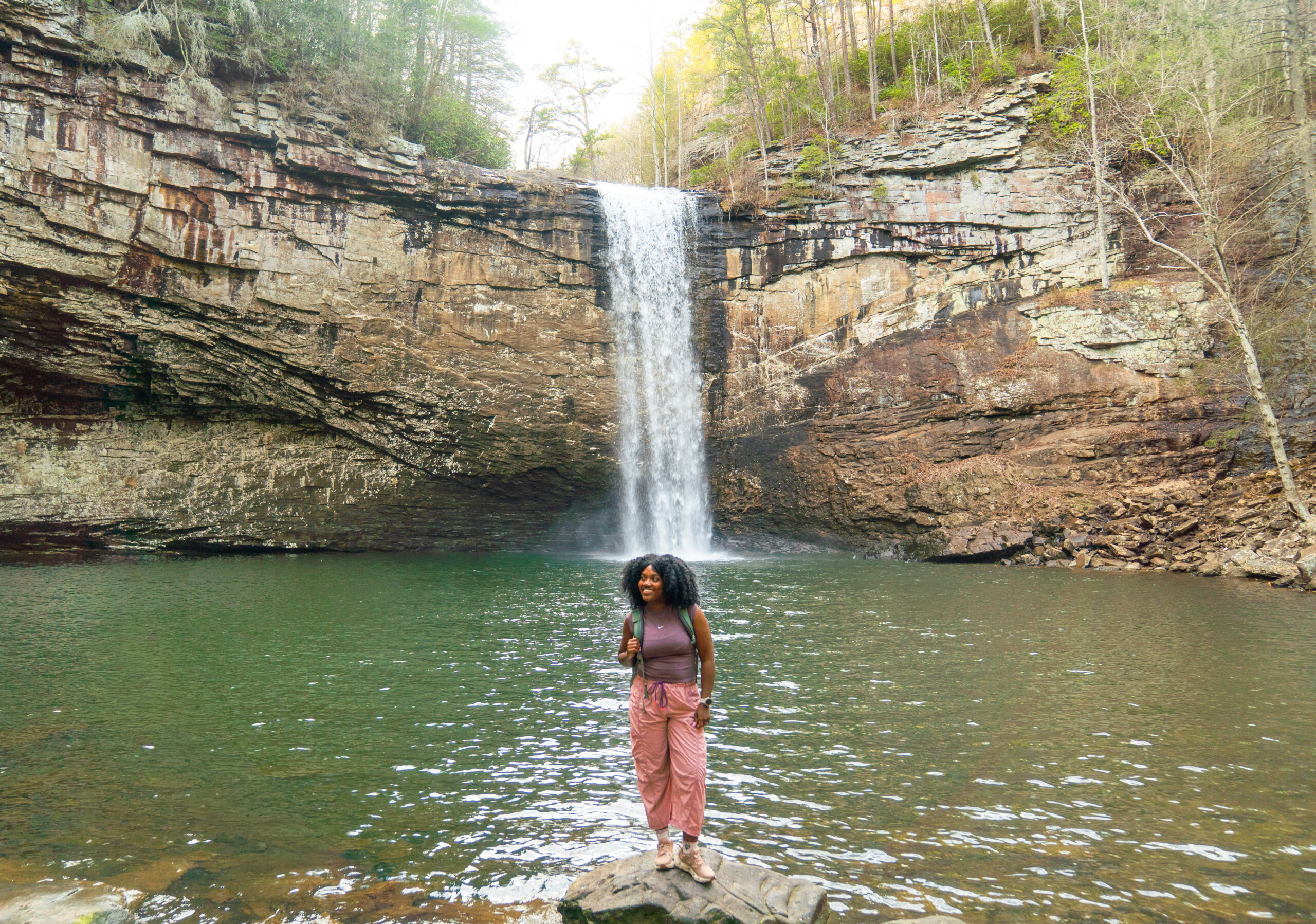
Tennessee has some of the best natural swimming holes in the Southeast, including waterfall pools, mountain streams, and easy-access spots that do not require an intense hike. Some are perfect for a relaxed afternoon, while others require permits, water crossings, and a little more preparation.
This guide covers some of the best swimming holes in Tennessee, including where to park, how far you will need to hike, whether you can actually swim there, and what you should know before getting into the water.
SEE ALSO: Best Hikes in Chattanooga, TN
Best Swimming Holes in Tennessee: Quick List
| Swimming hole | Area | Hike | Can you swim? | Best for |
|---|---|---|---|---|
| Cummins Falls | Cookeville | Strenuous gorge hike | Yes, with permit | Waterfall adventure |
| Big Soddy Creek Gulf | Near Chattanooga | Easy to moderate | Yes | Clear water and easy access |
| Foster Falls | South Cumberland | Short but steep | Yes | Waterfall swimming |
| Rutledge Falls | Tullahoma | Very short walk | Yes, when access is open | Easy summer stop |
| Old Stone Fort | Manchester | Easy trails | In permitted areas | Families and exploring |
| Blue Hole Falls | Elizabethton area | Short walk | Conditions vary | Clear mountain water |
| The Sinks | Great Smoky Mountains | Roadside | Not recommended | Scenic roadside stop |
Important: Natural swimming areas are never completely predictable. Water depth, currents, debris, temperature, and access can change after rainfall. Never assume a place is safe for jumping simply because you see someone else doing it.
Map of Tennessee Swimming Holes
1. Cummins Falls State Park
Location: 390 Cummins Falls Lane, Cookeville, TN
Trail difficulty: Strenuous
Swimming allowed: Yes, when the gorge is open
Permit required: Yes, for gorge access
Bathrooms: Available near the main park area
Cummins Falls is probably one of the first places you will see when searching for waterfalls you can swim in Tennessee, and it deserves its popularity.
The 75-foot waterfall drops into a large natural pool surrounded by rock ledges and forest. It is absolutely beautiful, but this is not an easy roadside swimming hole.
Reaching the bottom requires a physically demanding hike with uneven terrain, slippery rocks, river crossings, and sections where you may need to wade through the water. A Gorge Access Permit is required for anyone entering the gorge or visiting the waterfall’s base. Access may close with little warning when rain creates unsafe water conditions.
Can you actually swim at Cummins Falls? Yes, when the gorge is officially open. Children 12 and younger must wear a life jacket while swimming in the plunge pool, and the park recommends that children five and younger not attempt the trip.
Make it a weekend: Stay in Cookeville and pair your swim with downtown restaurants, Burgess Falls, or another short waterfall hike.
2. Big Soddy Creek Gulf
Location: Soddy-Daisy, near Chattanooga
Trail difficulty: Easy to moderate
Swimming allowed: Yes, depending on conditions
Best for: A relaxing summer creek day
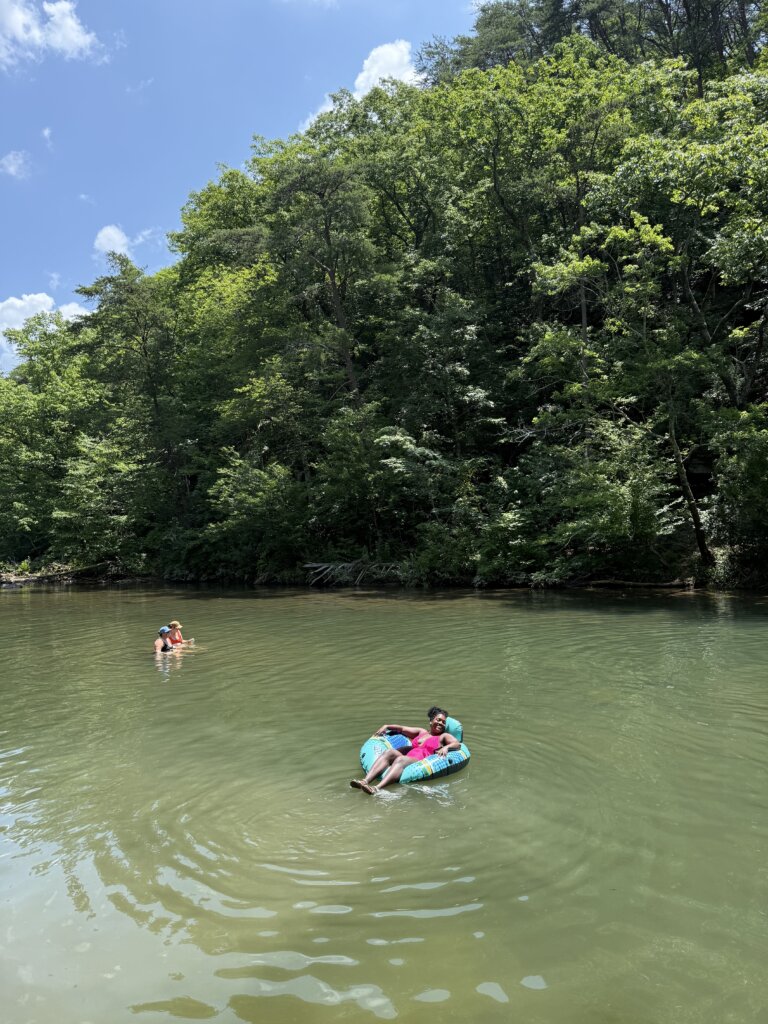
Big Soddy Creek Gulf is one of my favorite options near Chattanooga because you can decide how much effort you want to put into the day.
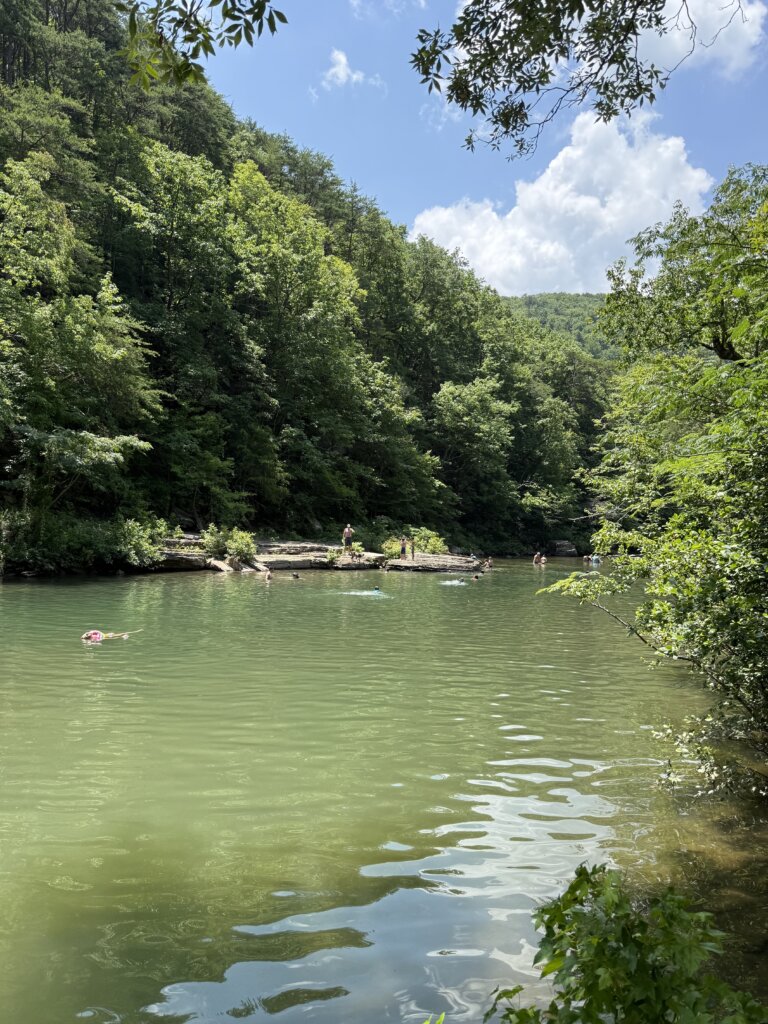
The trail follows the creek and passes several places where visitors stop to swim, sit on the rocks, and enjoy the clear water. You do not necessarily have to complete a long hike to find a place to cool off, which makes this a good choice for beginners or groups with different hiking abilities.
The water is beautiful, the surroundings felt peaceful, and it was the perfect way to cool down during a hot Chattanooga trip.
Water depth varies throughout the creek, so look carefully before entering. Skip the water after heavy rain or anytime the current appears stronger than usual.
Make it a weekend: Pair Big Soddy Creek Gulf with a Chattanooga stay, dinner downtown, paddleboarding on the Tennessee River, or sunrise at Snoopers Rock.
ALSO READ: Best Things to do in Chattanooga, TN
3. Foster Falls
Location: Foster Falls Recreation Area near Tracy City
Trail difficulty: Short but steep
Swimming allowed: Yes, when conditions permit
Bathrooms: Available near the trailhead
Best for: Waterfall views and a refreshing swim
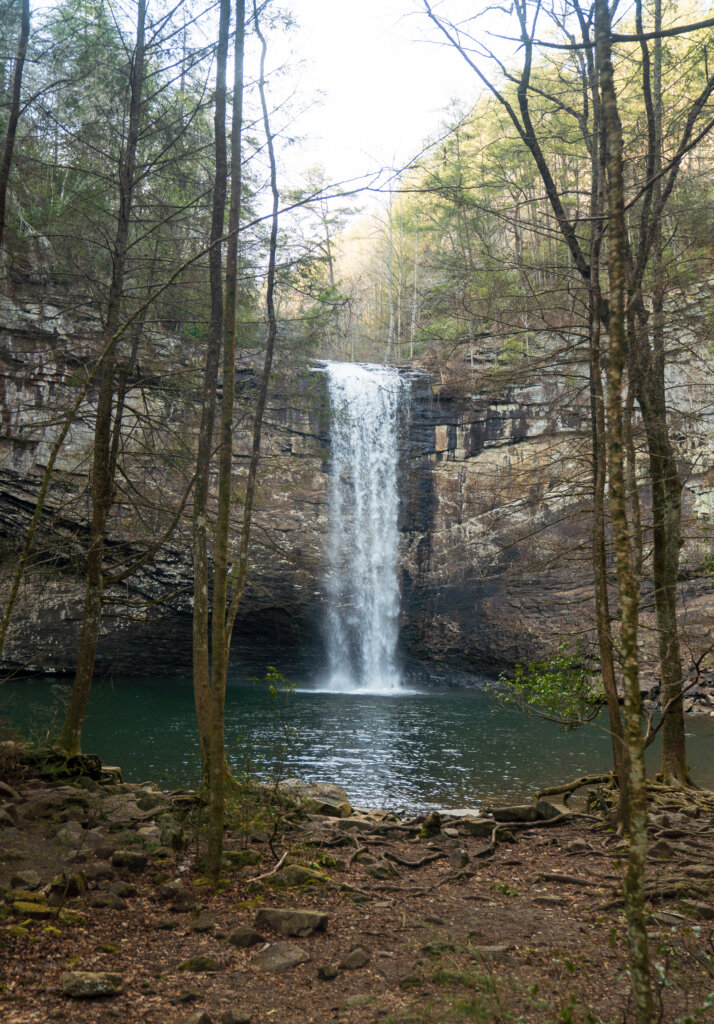
Foster Falls is one of the most photogenic Tennessee waterfalls you can swim in. The waterfall drops approximately 60 feet into a pool surrounded by dramatic rock walls.
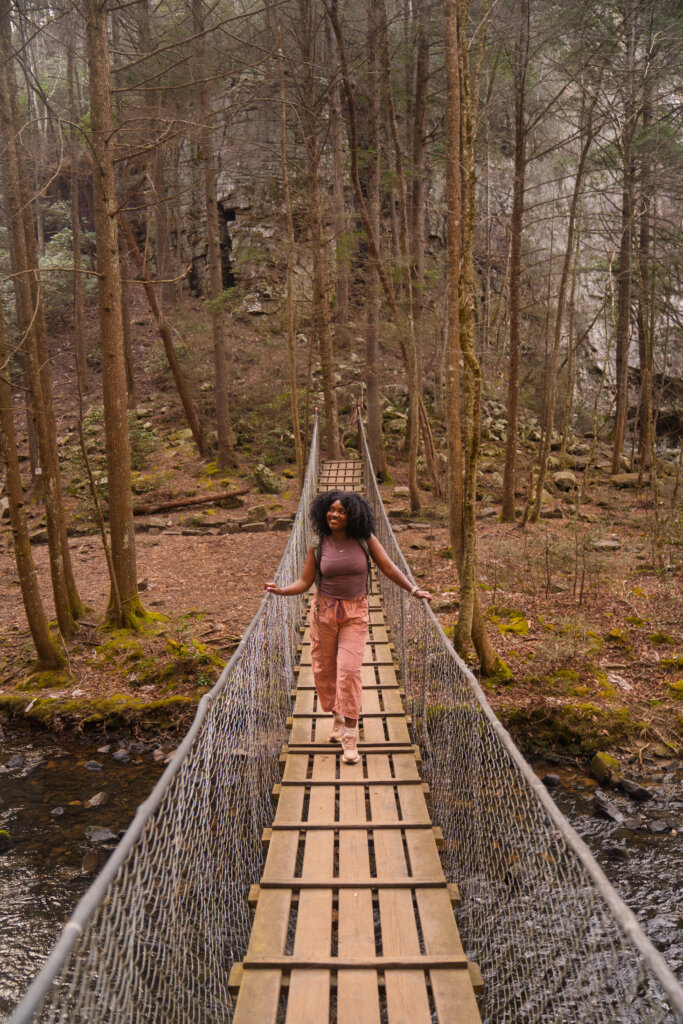
The overlook is relatively easy to reach, but getting down to the swimming area requires a steep, rocky descent. The return trip is uphill, so save some energy for the climb back to your car.
Swimming is among the recreational activities offered in the Foster Falls area, but there is no lifeguard. The water may also stay cold even when the outside temperature is hot.
Although you may see people jumping from rocks at natural swimming holes, I would not include cliff jumping in your plans. Water levels and submerged hazards can change, and a spot that looked deep during someone else’s visit may not be safe during yours.
4. Rutledge Falls
Location: Near Rutledge Falls Baptist Church in Tullahoma
Trail difficulty: Easy walk; slippery descent to the base
Swimming allowed: Traditionally yes, when private access remains open
Bathrooms: None
Best for: An easy, photogenic swimming stop
Rutledge Falls is a beautiful cascading waterfall with a natural pool at the bottom. The walk from the parking area is extremely short, making it one of the easiest-access natural swimming holes in Tennessee.
Rutledge Falls is located on private property. The owners have traditionally allowed respectful public access during posted hours, but that access should never be taken for granted. Check current signs and local updates before visiting.
Limited gravel parking has typically been available across from Rutledge Falls Baptist Church. There are no public bathrooms or trash cans, so come prepared to pack everything out. The main path is easy, but the final descent toward the water can be steep, rocky, and slippery.
5. Old Stone Fort State Archaeological Park
Location: 732 Stone Fort Drive, Manchester, TN
Trail difficulty: Easy to moderate
Swimming allowed: Only where current park rules permit
Bathrooms: Available
Best for: Families, history and multiple waterfalls
Old Stone Fort gives you much more than one swimming hole. The Duck and Little Duck Rivers meet within the park, creating cascades, pools, river gorges, and several scenic waterfalls.
The Enclosure Trail is a good way to see the park’s historic earthworks and water features without committing to an extremely difficult hike. Big Falls has a large pool below it, while Blue Hole Falls can be viewed from the Nature Trail area.
Conditions can change throughout the park, and not every pool near a waterfall is automatically open or safe for swimming. Check posted signs or ask a ranger where water access is currently permitted.
This would be one of my top picks for a group with mixed interests because you can hike, learn about the park’s history, see multiple waterfalls, and potentially find a place to cool down.
6. North Chickamauga Creek Blue Hole
Location: North Chickamauga Creek Gorge State Park near Chattanooga
Trail difficulty: Strenuous
Typical distance: Approximately one mile each way
Swimming allowed: Yes, when the trail is open and water conditions permit
Best for: Clear mountain water and an adventurous swim near Chattanooga
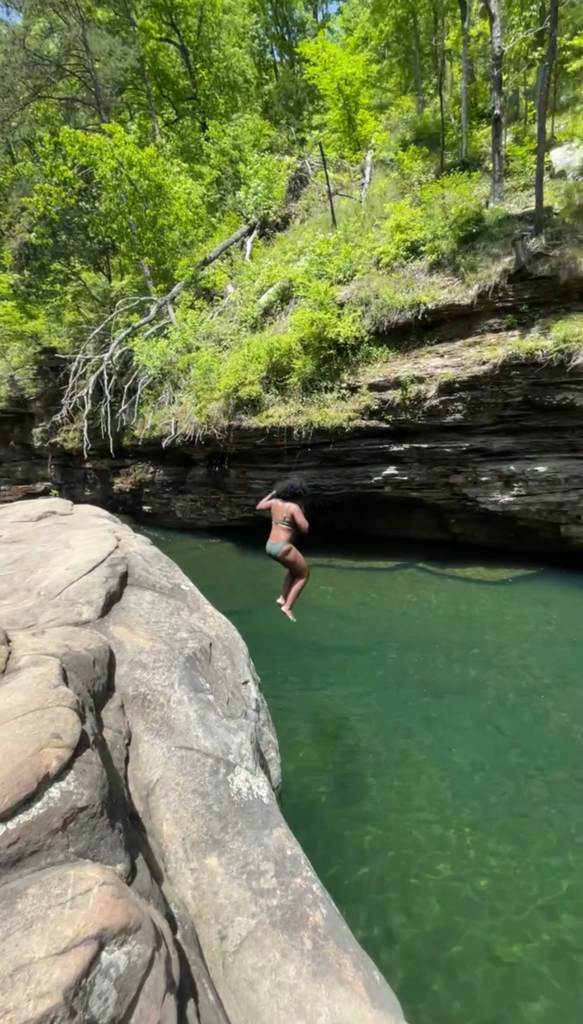
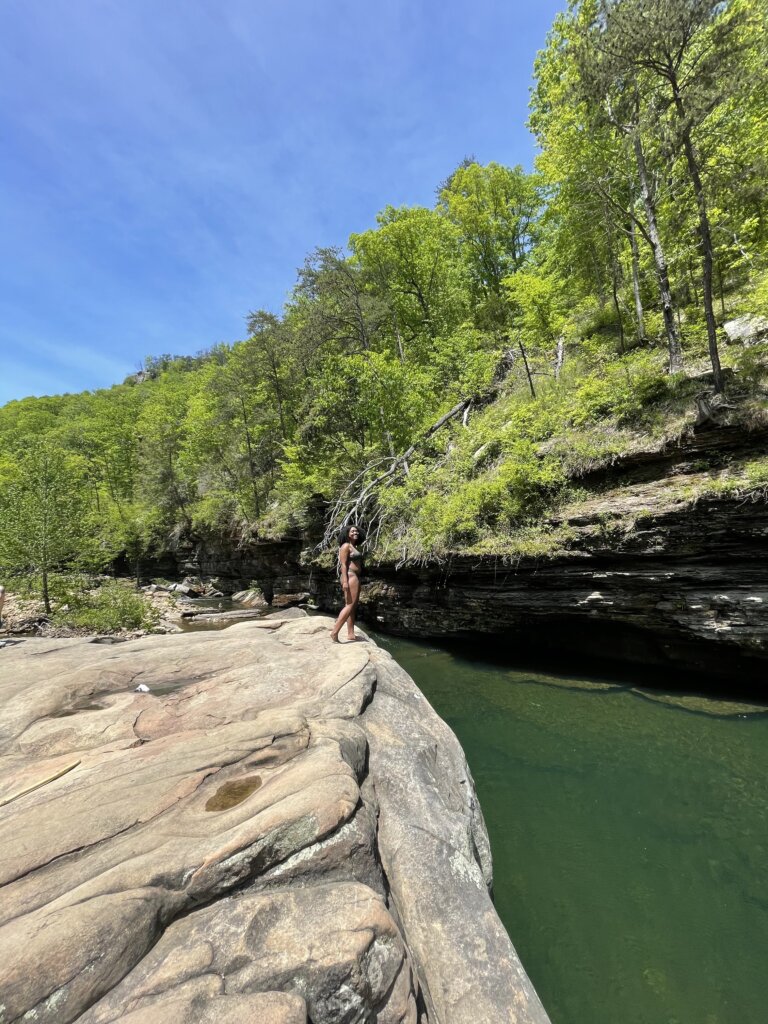
North Chickamauga Creek Blue Hole, often called North Chick Blue Hole by locals, is one of the most popular natural swimming holes near Chattanooga. The pool sits inside North Chickamauga Creek Gorge State Park, surrounded by large rocks, forest, and the rugged landscape of Walden’s Ridge.
The hike to the Blue Hole is only about one mile from the main parking area, but I would not describe it as an easy walk. The route includes dirt trails, large rocks, slippery surfaces, water crossings, and sections where you may need to wade through the creek. Tennessee State Parks recommends being physically prepared for strenuous hiking, swimming or wading, and crossing slick rocks.
The creek includes shallow areas where you can cool off, deeper natural pools, and large flat rocks where visitors can sit between swims. Access may close after rain or whenever water levels become unsafe, so check the park’s current alerts before leaving home.
Important 2026 Closure
Beginning March 23, 2026, the Montlake Road entrance, main trailhead, Blue Hole Trail, and Blue Hole access are closed for an improvement project expected to last approximately one year. Visitors should not attempt to enter the Blue Hole from another side of the gorge because the surrounding terrain is steep and unsafe. Entering the closed area may also result in charges.
Once the project is complete, the park plans to offer paved and striped parking, an improved entrance, an ADA-accessible river-viewing pier, and a restroom. Check directly with Tennessee State Parks for a reopening date before adding this stop to your itinerary.
7. The Sinks in Great Smoky Mountains National Park
Location: Little River Road, Great Smoky Mountains National Park
Trail difficulty: Roadside access
Swimming recommended: No
Bathrooms: Not at the immediate overlook
Best for: A scenic stop—not a swimming day
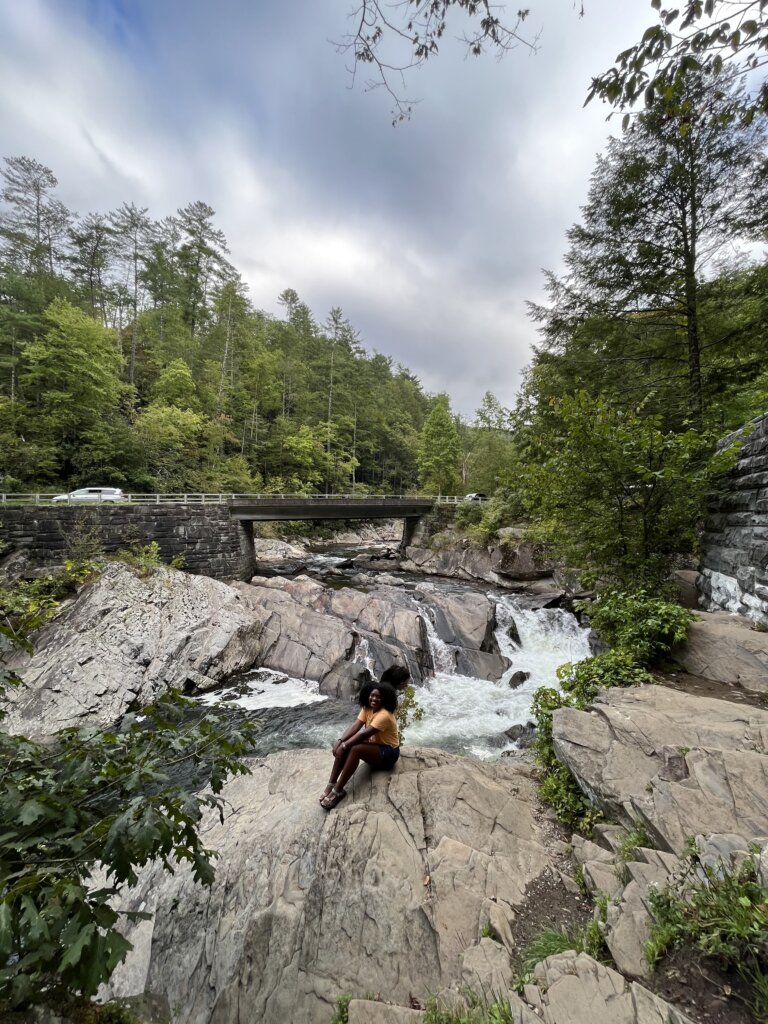
The Sinks is often described online as one of the most popular swimming holes in the Smoky Mountains, but this is where I want to be very clear: just because people enter the water does not mean the National Park Service considers it safe.
The Sinks has powerful currents, churning water, underwater hazards, and rapidly changing conditions. The National Park Service does not recommend water recreation in Great Smoky Mountains National Park. There are no lifeguarded swimming areas, river levels can rise rapidly, and unexpected undertows may exist below the surface.
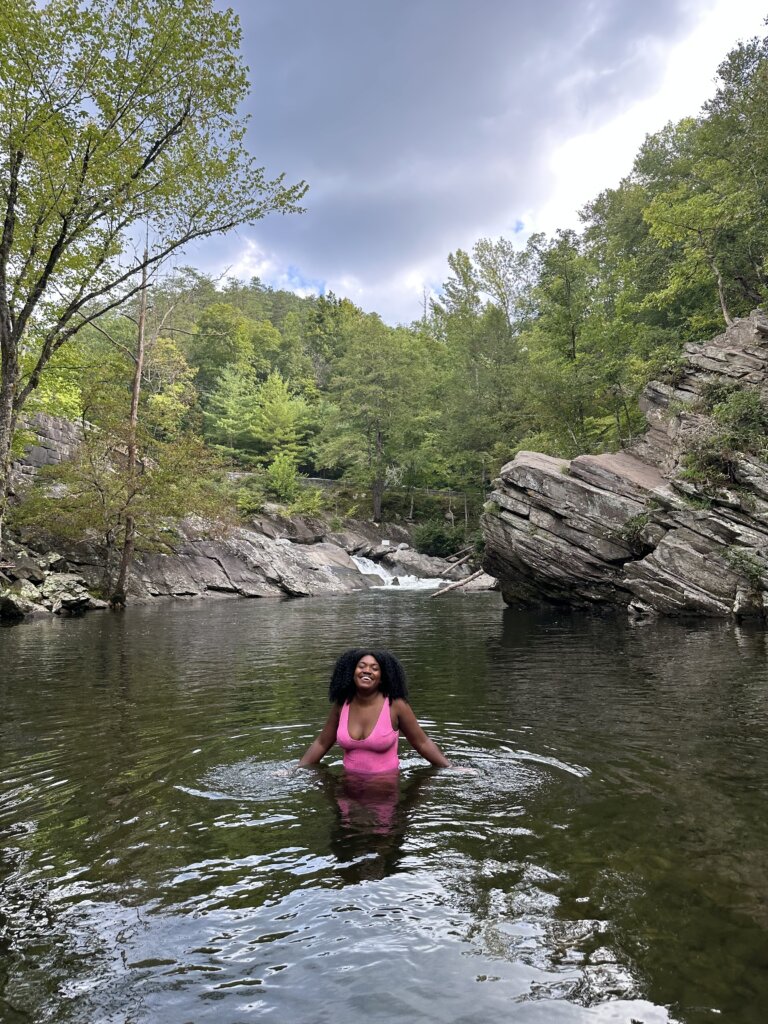
I would visit The Sinks as a quick scenic stop while driving Little River Road, but I would not plan on full-on swimming there. When we explored, we went to the more shallow area where you could see the bottom, which I highly recommend doing if you’re planning on doing any getting in the water here.
For a more controlled water activity near the Smokies, consider tubing with an established outfitter in Townsend and follow all local safety instructions.
Safety Tips for Tennessee Swimming Holes
Before visiting any Tennessee swimming hole:
- Check the weather where you are going and upstream from the swimming area.
- Avoid entering creeks, gorges, and waterfall pools after heavy rain.
- Wear water shoes with good traction.
- Never dive or jump into unfamiliar water.
- Bring a properly fitted life jacket for children and inexperienced swimmers.
- Keep your belongings in a dry bag.
- Do not climb wet rocks beside or above waterfalls.
- Leave immediately if the water starts rising, darkening, or moving faster.
- Pack out all food, towels, floats, and trash.
- Confirm access before visiting privately owned locations.
Rocks near waterfalls may be covered in algae and can be much more slippery than they look. Water may also be deep in one section and unexpectedly shallow just a few feet away.
What to Pack for a Swimming Hole Day
My swimming-hole packing list includes:
- Supportive water shoes
- Swimsuit or quick-dry clothes
- Lightweight towel
- Dry bag
- Waterproof phone pouch
- Reusable water bottle
- Sunscreen
- Bug spray
- Change of clothes
- Snacks or a packed lunch
- Small first-aid kit
- Personal flotation device when needed
I also recommend leaving a full change of clothes and an extra pair of shoes in the car. There is nothing worse than finishing the day and realizing you have to drive home in wet clothes.
Best Time to Visit Tennessee Swimming Holes
Late May through early September is usually the most comfortable period for swimming, but every season has trade-offs.
Spring: Waterfalls are often stronger and more dramatic, but the water is colder and currents may be faster.
Summer: The water is generally more comfortable, but parking lots and popular swimming holes can become crowded. Arrive early, especially on weekends.
Early fall: Crowds begin to thin and the scenery is beautiful, but pools may be shallower after a dry summer.
Always prioritize current weather and water conditions over the month on the calendar.
Frequently Asked Questions
Are swimming holes in Tennessee free?
Many are free, but some destinations require parking fees, admission, or permits. Cummins Falls requires a Gorge Access Permit to enter the gorge and reach the waterfall’s base.
What is the bluest swimming hole in Tennessee?
Water clarity changes with rainfall, sediment, lighting, and the season. Blue Hole Falls and the Conasauga River Blue Hole are known for clear mountain water, but no natural swimming hole will look equally blue every day.
Can you swim at waterfalls in Tennessee?
Yes, swimming is allowed at some Tennessee waterfalls, including Cummins Falls when the gorge is open. Other waterfall areas prohibit swimming or contain dangerous currents. Always follow the rules posted at that specific location.
Are Tennessee swimming holes safe?
Natural swimming holes have risks including cold water, slippery rocks, sudden depth changes, underwater debris, currents, and flash flooding. They can be enjoyed more responsibly, but they should never be treated like lifeguarded swimming pools.
