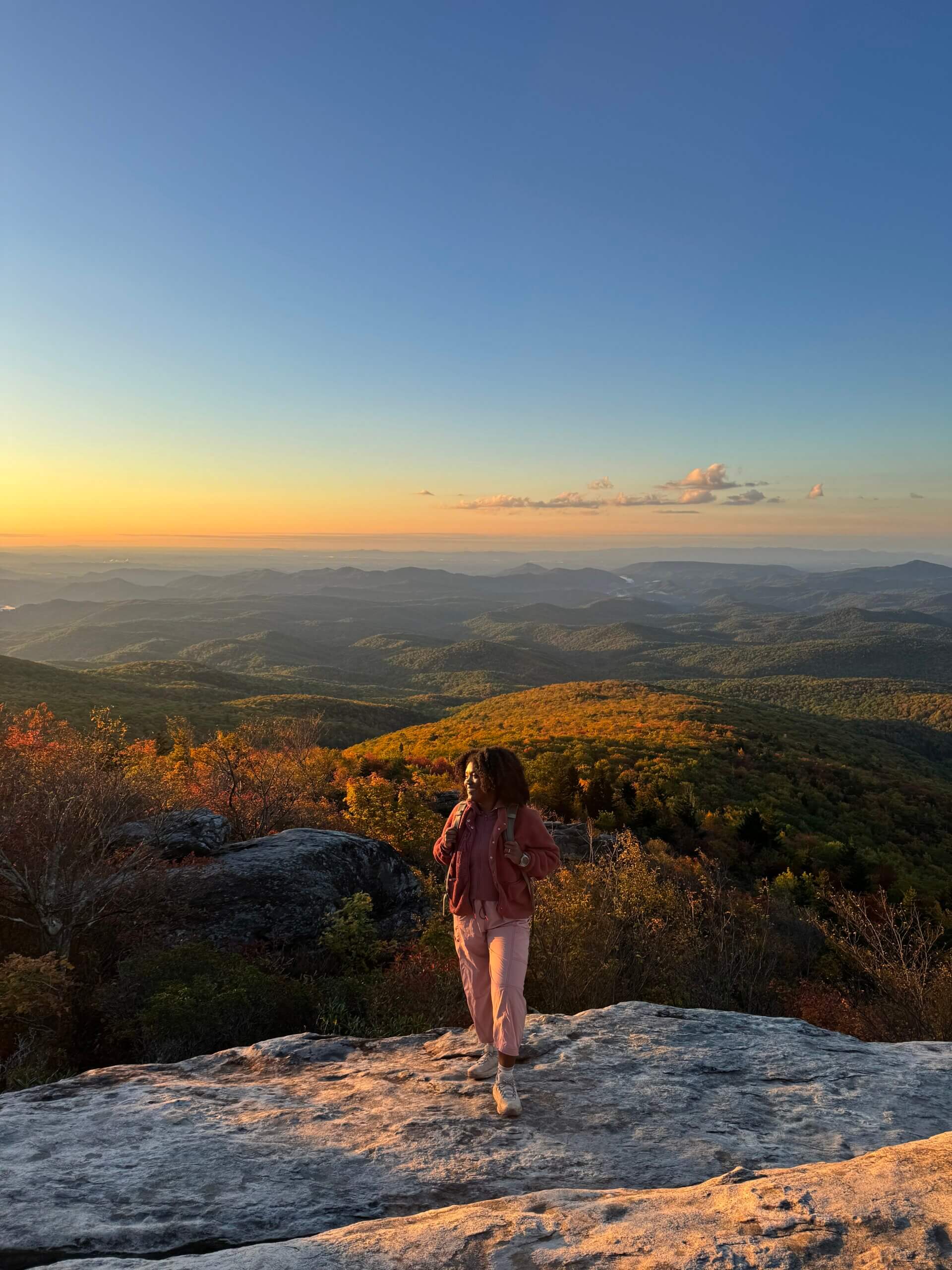
Fall is easily one of my favorite times to get outside. The temperatures finally start cooling down, the leaves are changing, and hiking just feels a little more enjoyable when you’re not sweating before you even make it out of the parking lot.
But figuring out what to wear for fall can also be a little tricky, especially when you’re hiking.
You can start the morning bundled up because it’s 45 degrees outside, only to be peeling layers off an hour into your hike when the sun comes out. And if you’re hiking somewhere in the mountains, the weather can change even faster.
The biggest thing I’ve learned is that your fall hiking outfit doesn’t need to be complicated. You just want pieces that are comfortable, easy to layer, and easy to take off and throw in your backpack when you warm up.
If you’re wondering what to wear hiking this fall, here’s exactly what I recommend.
ALSO READ: Best Places to See Fall Colors in North Carolina
What to Wear for Fall Hiking
My basic go-to for a fall hiking outfit is:
A moisture-wicking top + comfortable hiking bottoms + a light insulating layer + a packable jacket + good socks + hiking shoes or trail runners.
The exact combination will depend on the temperature, where you’re hiking, and how strenuous the trail is.
Layering is especially useful in fall because you can add or remove clothing as your activity level and the weather change. A traditional outdoor layering system includes a moisture-managing base layer, an insulating middle layer, and an outer shell that helps protect against wind and rain.
You probably won’t need all three layers on every fall hike, but I would rather have an extra lightweight layer sitting in my backpack than wish I had brought one.
1. Start With a Moisture-Wicking Top
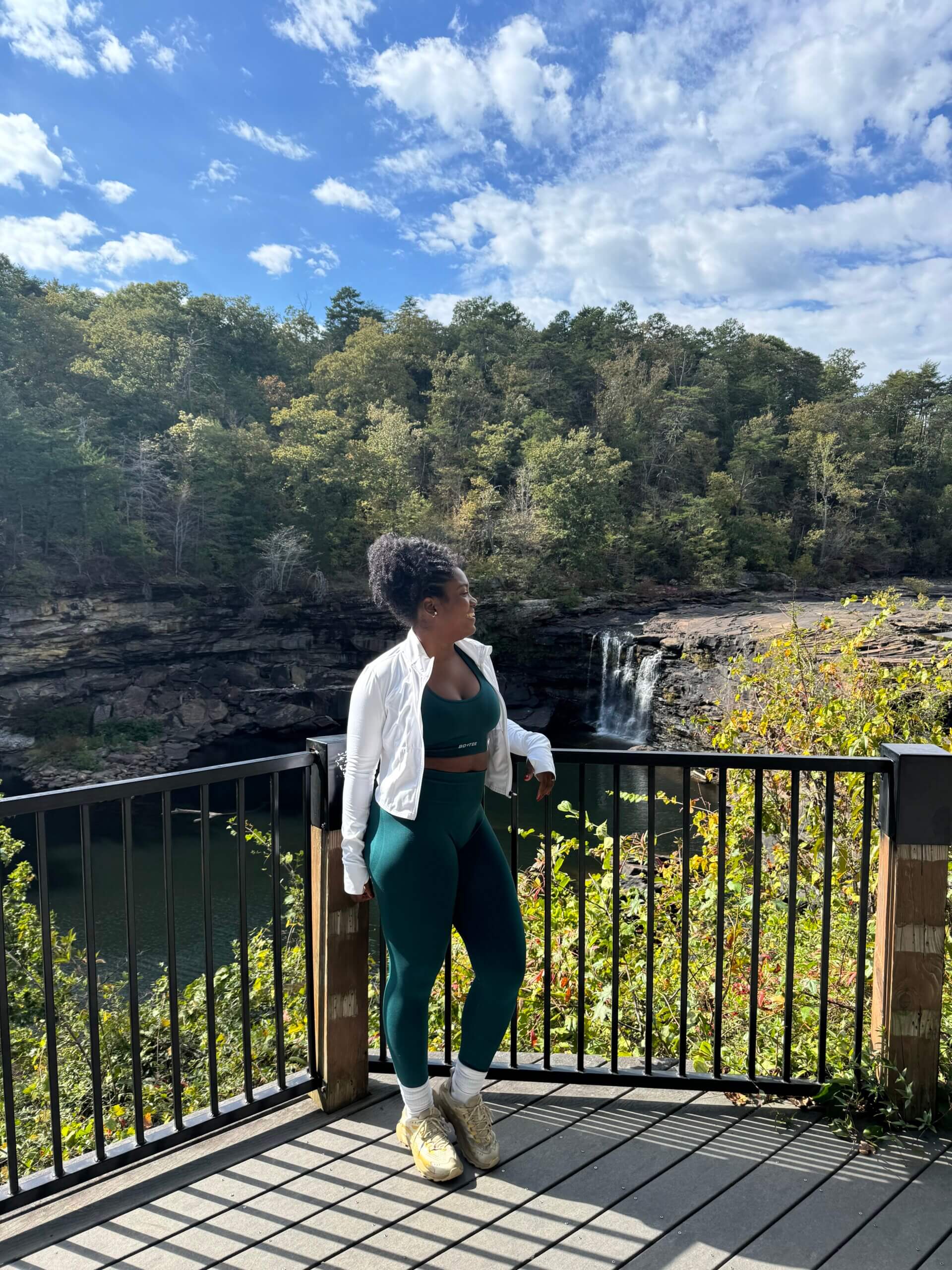
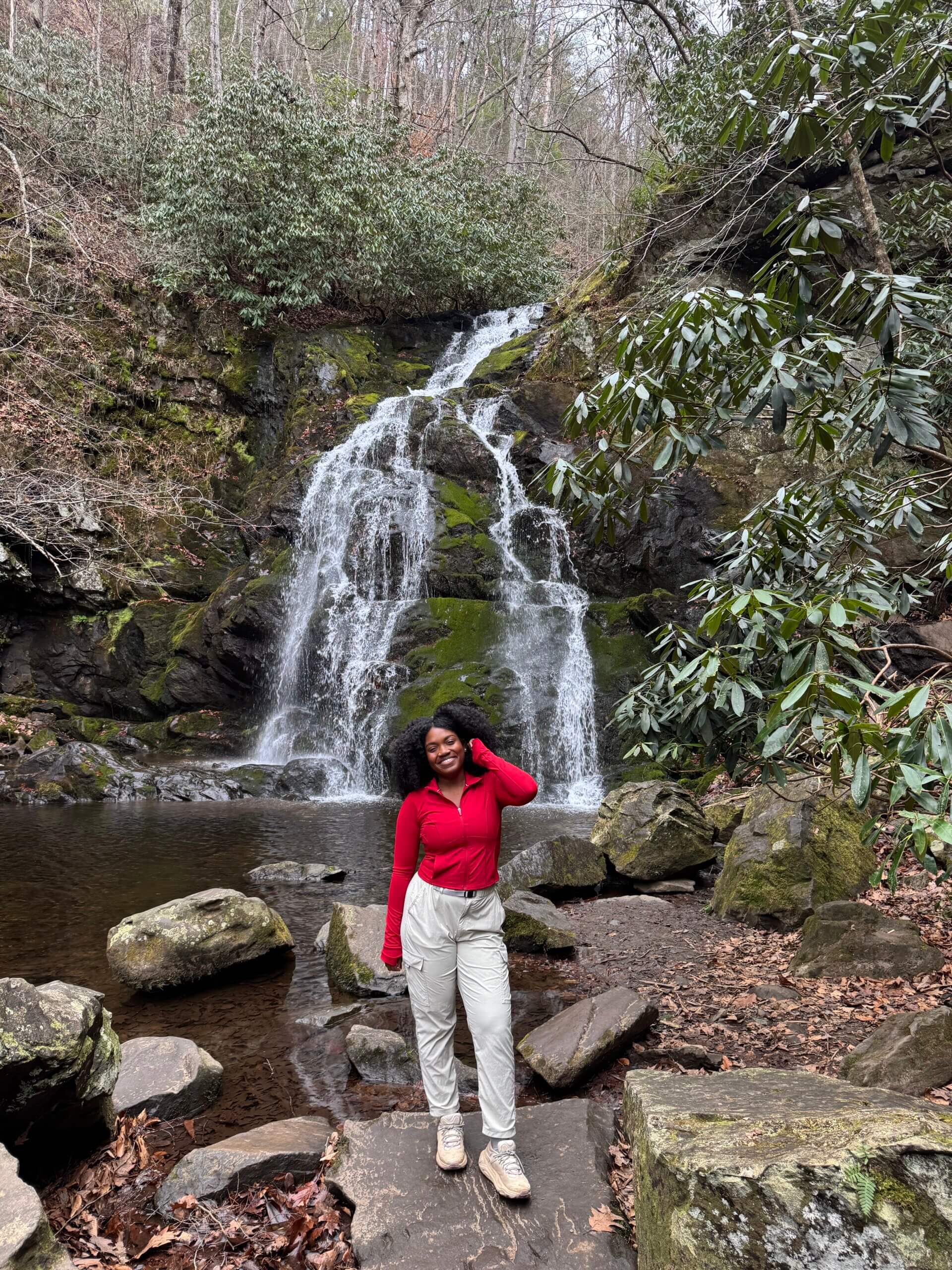
Your first layer is the one sitting directly against your skin, so this is where I prioritize something lightweight and breathable.
For early fall, I’ll usually wear a short-sleeve performance shirt or tank and bring another layer with me.
Once temperatures start dropping, I like:
- Long-sleeve performance tops
- Lightweight merino wool tops
- Quarter-zips
- Thin thermal tops
- Moisture-wicking athletic shirts
Try to avoid heavy cotton for longer hikes, especially if there’s a chance you’ll sweat or get wet. Synthetic fabrics and merino wool tend to manage moisture and dry more efficiently than cotton.
SHOP THIS SECTION:
Your favorite hiking top
Merino wool option
2. Add a Fleece, Vest, or Lightweight Mid-Layer
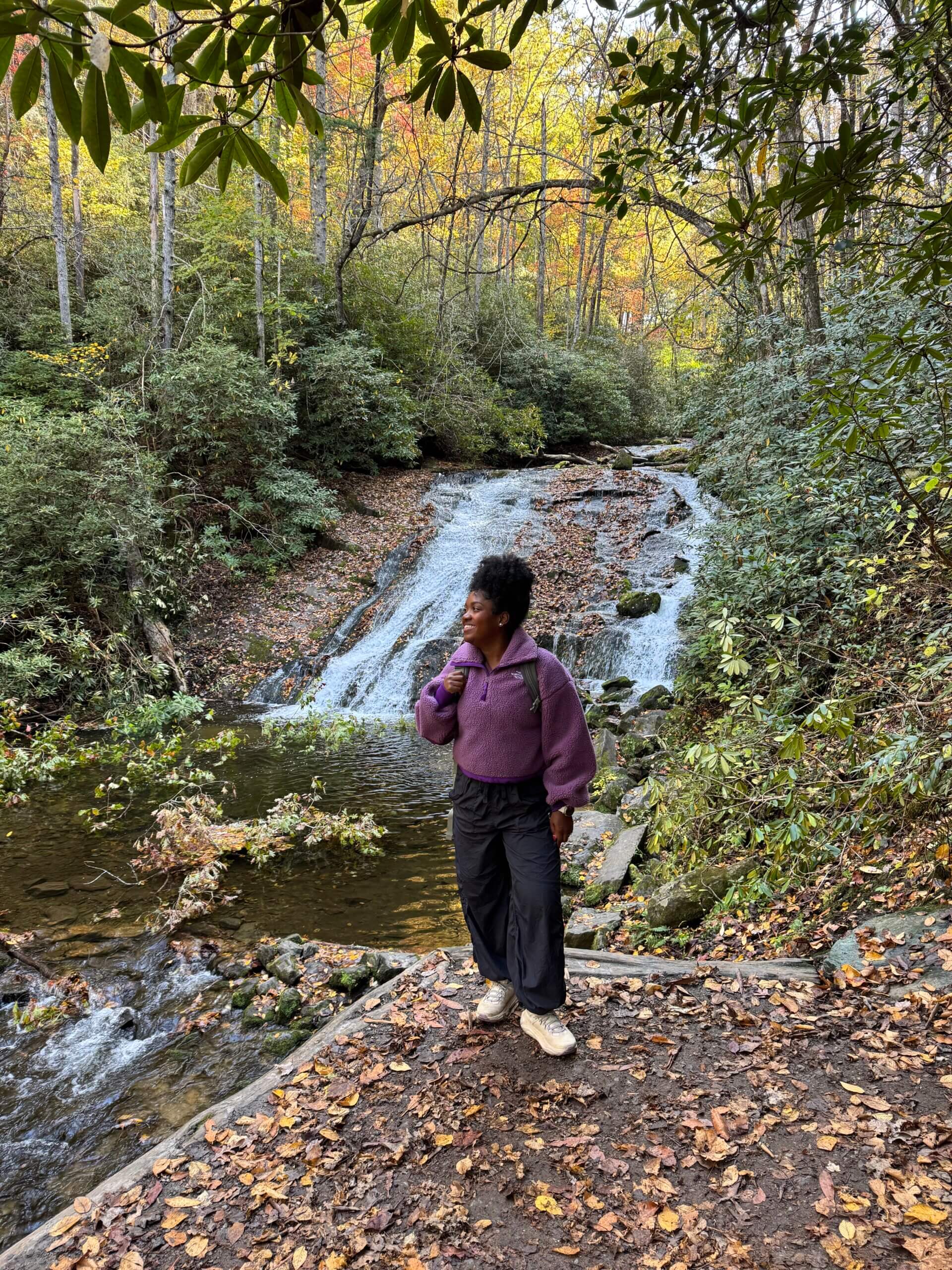
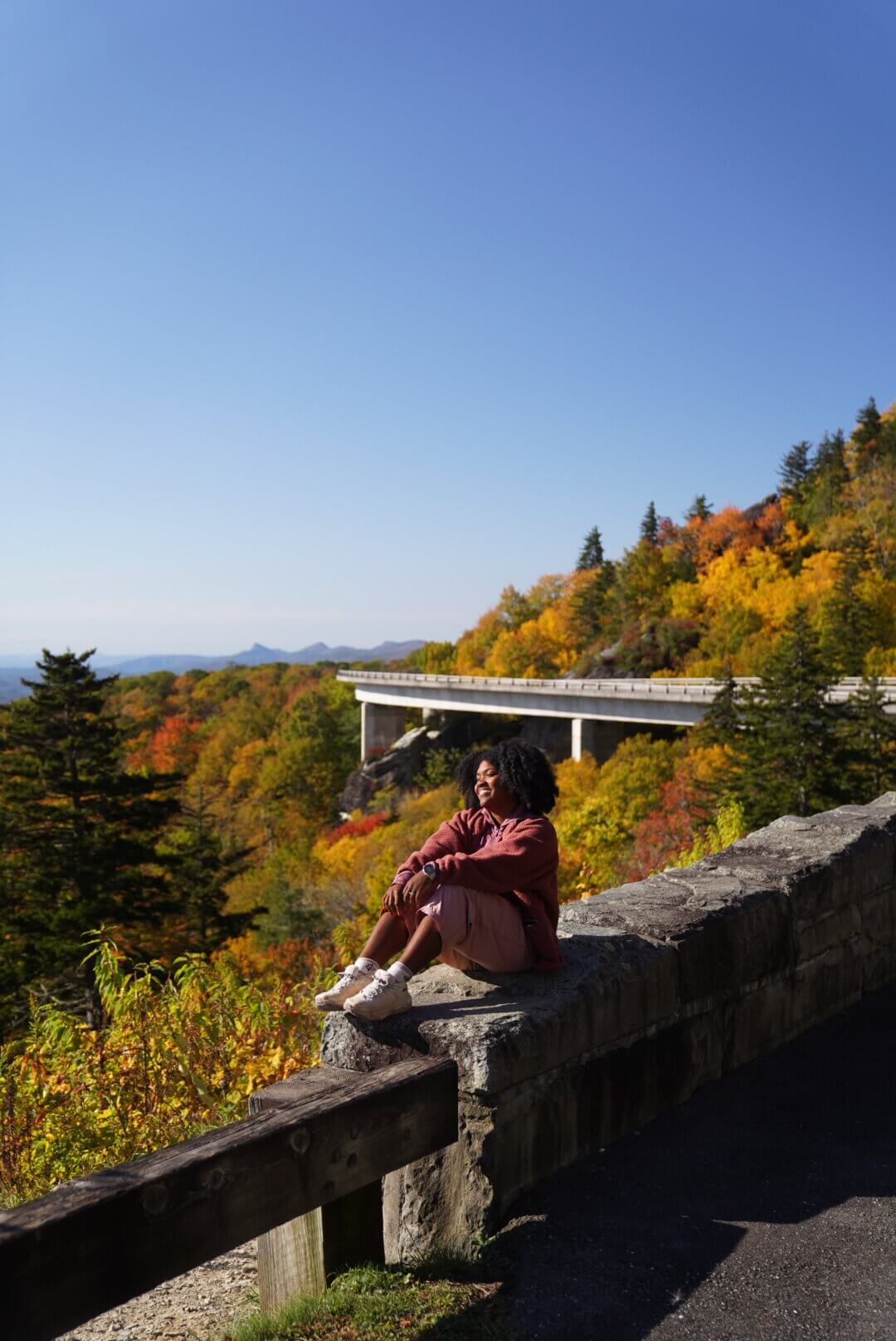
This is probably the layer I use the most during fall.
A lightweight fleece gives you enough warmth for a cool morning without feeling like you’re wearing a full winter coat.
Depending on the weather, I would choose:
- Lightweight fleece
- Quarter-zip fleece
- Hiking vest
- Thin insulated jacket
- Lightweight puffer
I especially love pieces that zip because they’re easier to vent when I start warming up.
Your mid-layer is there primarily to help retain body heat, while your outer layer handles wind and rain.
And this is where having a backpack comes in handy. Once I get hot, the fleece normally comes right off.
3. Wear Hiking Pants or Leggings
You absolutely do not have to wear traditional hiking pants every time you go hiking.
For most casual fall hikes, I’m perfectly comfortable in leggings.
I usually choose between:
Leggings
Great for:
- Shorter hikes
- Dry weather
- Mild fall temperatures
- Trails without a lot of brush
Look for leggings that are comfortable, moisture-wicking, and preferably have pockets.
Hiking Pants
I reach for hiking pants more often when:
- The trail is rocky or overgrown
- Rain is possible
- I want more protection
- Temperatures are cooler
- I’m hiking somewhere more rugged
Quick-drying hiking pants are especially helpful during fall because damp conditions and changing weather are more common.
Hiking Shorts
And yes, you can still hike in shorts during fall.
If you’re hiking in Georgia, Tennessee, North Carolina, or anywhere else in the Southeast, early fall can still be pretty warm.
On a 70-degree October afternoon, I am not forcing myself into pants just because the calendar says fall.
4. Bring a Packable Rain or Wind Jacket
This can stay in your bag 90% of the time, but you’ll be glad you brought it the other 10%.
A lightweight outer layer can help protect you from:
- Unexpected rain
- Wind
- Cooler temperatures at higher elevations
- Chilly mornings and evenings
I prefer something lightweight enough that I can fold it down and toss it in my daypack.
You don’t necessarily need a heavy waterproof jacket for every hike. Choose your outer layer based on the forecast and where you’re going.
SHOP THIS SECTION:
Favorite fleece jacket
Favorite rain/windbreaker
Budget-friendly packable jacket
5. Choose the Right Hiking Shoes
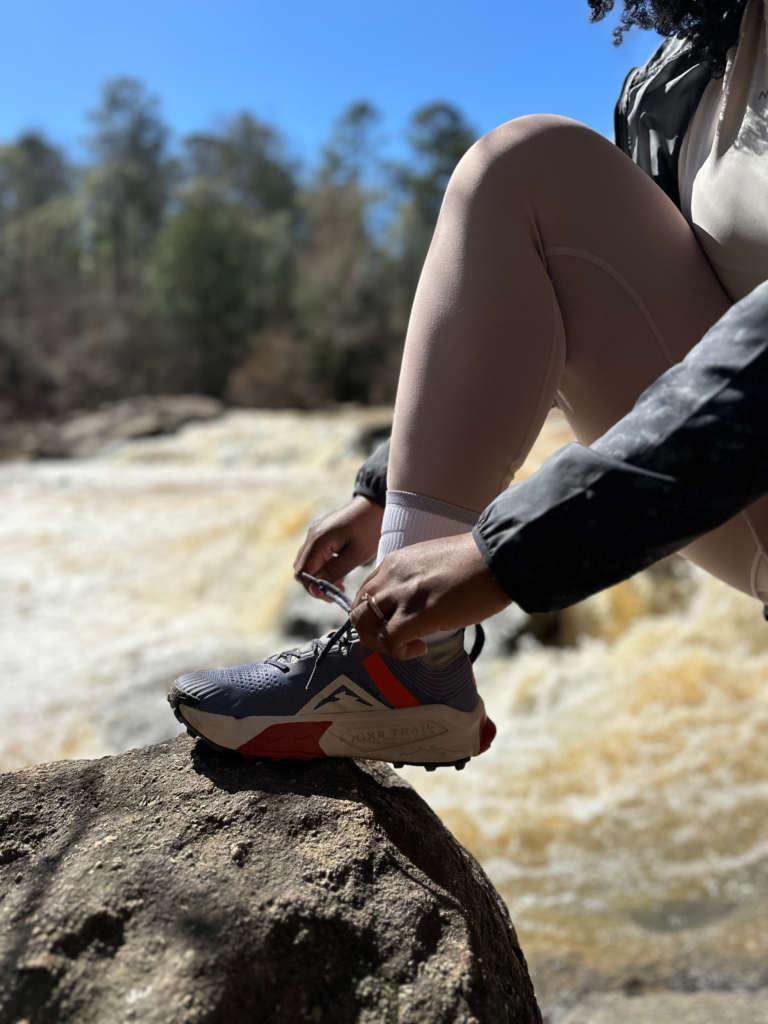
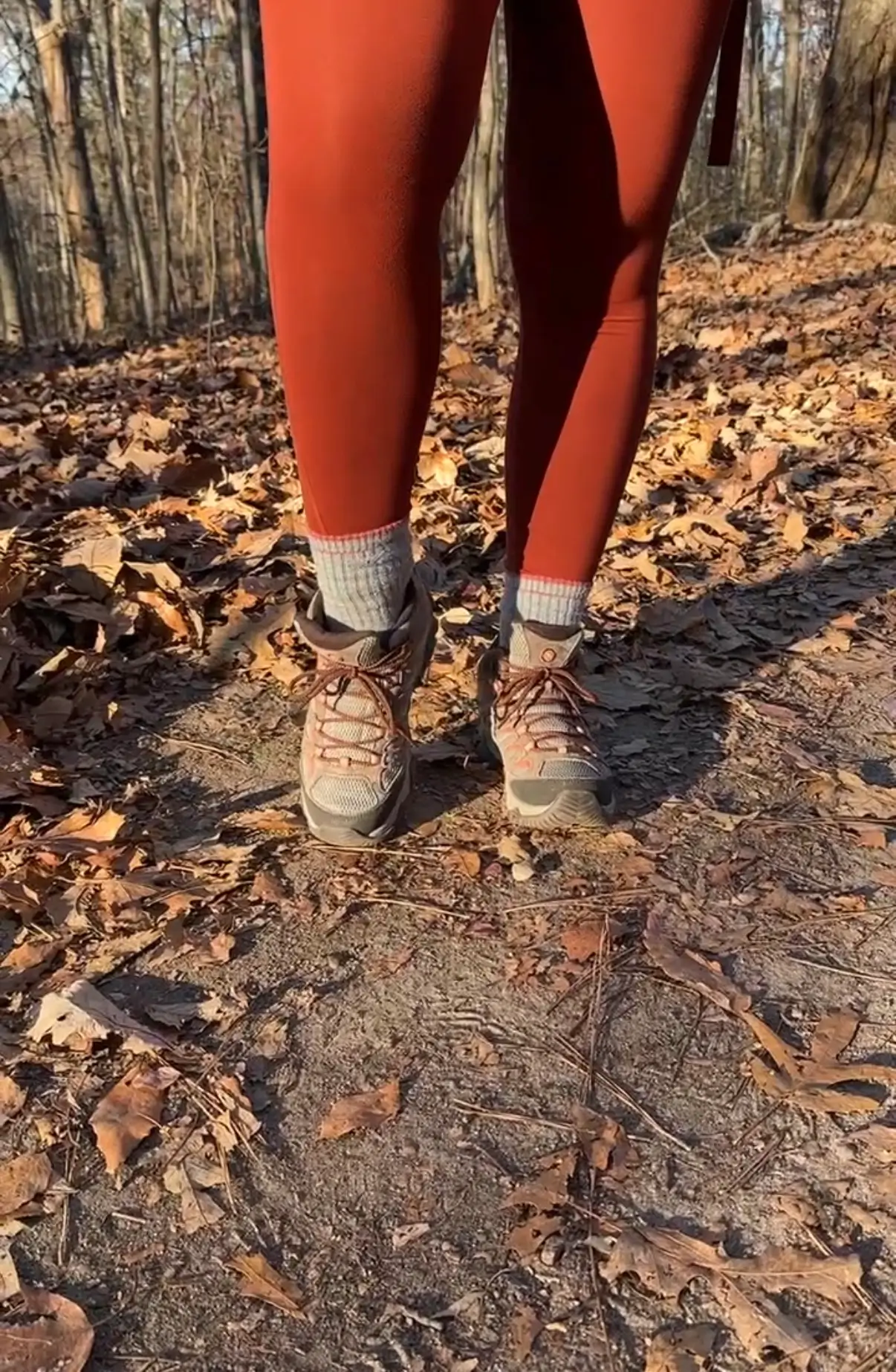
You don’t automatically need hiking boots just because it’s fall. I still wear trail runners for plenty of hikes.
Trail runners are great for:
- Dry trails
- Moderate hikes
- Faster-paced hiking
- People who prefer lightweight shoes
Hiking boots are great for:
- Muddy trails
- Rocky terrain
- Colder weather
- Longer hikes
- Anyone who prefers more ankle coverage
The most important thing is wearing a shoe you’ve already tested and know is comfortable.
Please do not make your six-mile fall hike the first time you wear a brand-new pair of boots. Your feet will remind you of that decision.
Shop This Section:
Favorite Hiking Boot
Favorite Hiking Runner
6. Don’t Forget Good Hiking Socks
Your socks are one of those tiny purchases that can make a surprisingly big difference.
I prefer wool or wool-blend hiking socks because they work well across a range of temperatures and help manage moisture. REI similarly recommends wool or wool-blend hiking socks as part of a fall or cool-weather layering system.
Depending on the weather, you can choose:
- Lightweight hiking socks
- Midweight wool socks
- Crew socks
- Higher hiking socks for boots
I’ll also sometimes keep a second pair in my backpack on longer hikes. Wet socks are not the adventure I signed up for.
7. Add a Hat, Gloves, or Beanie When Needed
You probably won’t need these for every fall hike. But once you get into late fall or start hiking at higher elevations, I like keeping a few small accessories in my bag.
Consider bringing:
- Beanie (or ear warmers for my girls with big hair)
- Lightweight gloves
- Neck gaiter
- Sunglasses
They take up almost no space and can make a chilly morning much more comfortable.
Fall Hiking Essentials I Keep in My Backpack
Once you have your outfit figured out, there are a few other things I recommend bringing during fall.
My list usually includes:
- Lightweight jacket
- Extra layer
- Water
- Electrolytes
- Snacks
- Portable charger
- Sunscreen
- Sunglasses
- Basic first-aid kit
- Headlamp
- Extra socks
- Rain cover or dry bag
- Trekking poles when needed
One thing people sometimes forget about fall hiking is that the days start getting shorter.
If there is even a chance you’ll be finishing your hike close to sunset, put a headlamp in your backpack.
ALSO READ: What to Pack When Hiking
What Not to Wear Hiking in Fall
You can hike in whatever makes you comfortable, but there are a few things I personally try to avoid.
Heavy cotton clothing
Once it gets sweaty or wet, it can stay damp for a while.
Jeans on longer hikes
For a short nature walk? Fine.
For a strenuous six-mile hike where it might rain? There are much more comfortable options.
One giant coat
Instead of wearing one super-heavy layer, wear several lighter ones you can adjust throughout the day.
Brand-new hiking shoes
Break them in first.
Please.
Clothes you can’t comfortably move in
Cute matters, but being able to lift your leg over a giant fallen tree also matters.
We need both.
How to Build a Fall Hiking Wardrobe Without Buying Everything
If you’re newer to hiking, please don’t feel like you need an entirely separate outdoor wardrobe.
You probably already own several things you can use.
Start with:
- Comfortable athletic leggings
- Moisture-wicking workout top
- Lightweight fleece
- Rain jacket
- Athletic or trail shoes
- Good socks
- Small backpack
Then add more technical pieces as you start hiking more often and learn what you actually like.
I would much rather see someone use the athletic clothes already sitting in their closet and get outside than feel like they have to spend $500 before they’re officially allowed on a trail.
My Favorite Places to Shop for Fall Hiking Clothes
Depending on your budget and style, some of the places I regularly look for outdoor clothing and gear include:
- REI
- FP Movement
- Fabletics
- HOKA
- Patagonia
- Outdoor Research
- Smartwool
- Teva
- Amazon
